
417-771-5817
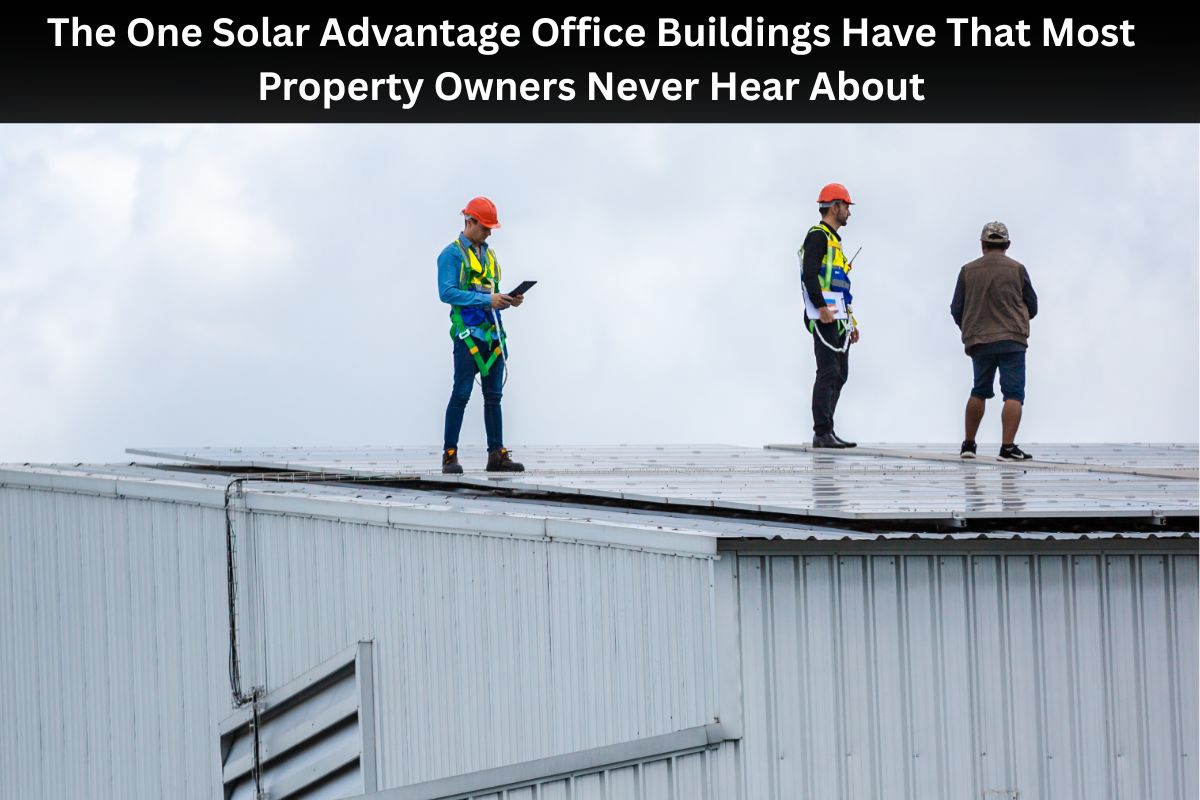
Most office building owners evaluate solar the same way they’d evaluate it for a house: get a quote, look at the price per watt, and see how many years it takes to break even. That comparison sounds reasonable, but it’s built on the wrong model, and it’s why so many commercial property owners walk away from solar thinking the payback is longer than it actually is.
Here’s the agitation: two buildings with the exact same roof size, the exact same electric bill, and the exact same system size can have completely different payback timelines. Ask five different companies for a quote and you’ll get five different answers on system size, savings estimates, and payback period — and most of those companies won’t be able to tell you why the numbers moved. That inconsistency makes it hard to trust any single number, and it’s a big reason commercial solar decisions get delayed year after year.
The reason behind those differences comes down to one factor that almost nobody explains clearly: when a building uses its electricity, not just how much it uses. Office buildings have a natural advantage that most homes simply don’t—and once you understand how that affects an office solar installation, the entire ROI conversation looks very different.
Quick Answer: Office buildings typically use most of their electricity between roughly 8 a.m. and 6 p.m. — the same hours a solar array produces the most power. That overlap, often called load-matching, means an office building can use a larger share of its solar power the moment it’s generated, instead of sending it back to the grid at a lower value or needing a large battery to store it. Homes don’t get this advantage nearly as easily, since household electricity use tends to peak in the evening, after solar production has already tapered off. For office properties, this timing match is often the single biggest factor separating a good solar payback from a mediocre one.
Why Office Buildings Are Fundamentally Different From Homes
A residential solar installation quote and a commercial solar installation quote might use the same panels and the same basic equation, but the buildings behind those numbers behave nothing alike.
A typical house draws relatively little power during the day while everyone is at work or school, then usage climbs sharply in the evening: lights, cooking, laundry, HVAC recovering from a warm afternoon, and electronics all running at once. Solar production, meanwhile, peaks in the middle of the day and falls off by early evening. That mismatch is exactly why home solar conversations spend so much time talking about batteries and export rates — without one or the other, a big share of a home’s solar power gets sent back to the grid at a lower value than what the homeowner pays to pull power back at night.
An office building runs on the opposite schedule. HVAC systems, lighting, elevators, server rooms, copiers, and workstation power are all concentrated in business hours — the same window when a solar array is doing most of its work. That’s the advantage nobody talks about: the building’s demand curve and the sun’s production curve are already lined up, before a single design decision gets made.
What “Self-Consumption” Actually Means for Your Bottom Line
In the industry, this is called self-consumption — the percentage of solar power a building uses in real time, as it’s generated, rather than exporting it to the grid. A higher self-consumption rate generally means a faster payback, because the building is directly offsetting power it would otherwise be buying from the utility at full retail rate, instead of exporting it at whatever rate the utility credits for exported power.
For a well-designed office building system, self-consumption rates are often meaningfully higher than what’s realistic for an average home, simply because the building is occupied and running equipment during the exact hours the panels are producing. This is one of the first things an experienced commercial solar designer checks before ever proposing a system size — not just “how much roof do you have,” but “how closely does your usage pattern track sunlight hours.”
Real-World Scenarios: How This Plays Out on Actual Buildings
This isn’t just a theory. It shows up differently depending on the type of office property and how it’s used.
- A multi-tenant professional building in Springfield, Missouri, with standard 8-to-5 office hours across every suite will typically show a strong midday demand profile — exactly the window where a correctly sized system produces the most power.
- A single-tenant corporate office in St. Louis with a data closet or server room running continuously adds a baseline load on top of the daytime spike, which can support an even larger system size before production starts to exceed what the building can use in real time.
- A professional building in Fayetteville or Rogers, Arkansas, that leases suites to multiple small businesses may have staggered hours across tenants, which changes how tightly usage tracks the solar curve and is worth reviewing tenant-by-tenant rather than assuming a single pattern for the whole building.
- A property in Belleville or O’Fallon, Illinois, with a mix of office and light retail space on the ground floor will have two different usage patterns under one roof, which affects both system sizing and where on the property production is best allocated.
None of these buildings would get an accurate quote from a calculator built for residential rooftops. The usage pattern has to be reviewed property by property, which is exactly why a proper site and usage assessment matters more for commercial buildings than it does for homes.
What Actually Affects Savings and ROI for an Office Building
Beyond the load-matching advantage, several other factors move the needle on commercial solar ROI that don’t get nearly enough attention in generic solar content.
Roof Type and Condition
Most office buildings have flat or low-slope roofs, which is actually good news for solar — it allows for tilted racking that can optimize panel angle regardless of which direction the building faces, something a steep residential roof can’t do. The trade-off is that flat commercial roofs need a closer look at membrane type, age, and remaining warranty life before installation, since nobody wants to remove and reinstall an array in a few years to redo the roof underneath it.
Lease Structure
This is one that residential content never has to deal with, and it’s genuinely important: how the building is leased changes who benefits from solar savings and how that gets communicated to tenants. In a triple-net (NNN) lease, tenants typically pay utilities directly, which changes the savings conversation compared to a gross lease where the owner covers utilities and captures the savings directly. An experienced commercial solar team will ask about lease structure early, not as an afterthought.
HVAC Load and Equipment Age
Office HVAC systems are often the single largest electricity draw in the building. Older rooftop units running long hours can shift both the size of system that makes sense and the overall savings math, since a building with heavy HVAC demand concentrated in daytime hours tends to see even stronger self-consumption than one with lighter, more spread-out usage.
Utility Rate Structure and Demand Charges
Many commercial utility accounts include demand charges — fees based on the building’s highest spike in power draw during a billing period, not just total energy used. Solar can help flatten those spikes when production lines up with peak demand periods, which is a savings lever that doesn’t exist on a typical residential bill at all.
Want a broader look at the financial side of commercial solar beyond office buildings? Read our guide on “Is Commercial Solar a Good Investment for Midwest Businesses in 2026?“ to explore long-term ROI, financing options, and what businesses across the Midwest should consider before investing.
Homes vs. Office Buildings: Why the Solar Math Isn’t the Same
|
Factor |
Typical Home |
Typical Office Building |
|
Peak electricity use |
Morning and evening |
Midday, business hours |
|
Alignment with solar production |
Often mismatched |
Often well-matched |
|
Typical roof type |
Pitched, single orientation |
Flat or low-slope, flexible tilt |
|
Battery storage need |
Often recommended for full offset |
Often optional, depending on load |
|
Who benefits from savings |
Homeowner directly |
Depends on lease structure |
|
Demand charges on utility bill |
Rare |
Common on commercial accounts |
Why Commercial Solar Quotes Vary So Much
If you’ve requested more than one quote for an office building and gotten wildly different numbers, this is usually why:
- System sizing based on roof space alone, instead of a real usage-and-load review
- Different assumptions about self-consumption versus export, without explaining the difference
- Structural engineering review — or lack of one — for a flat commercial roof, which affects racking type and system cost
- Interconnection and utility approval complexity, which is generally more involved for commercial accounts than residential ones
- Equipment tier differences between quotes that look similar on paper but use different inverter and panel technology
An accurate commercial quote should be able to walk you through each of these, not just hand you a single number with a payback period attached.
What to Know Before Choosing a Solar Installer for Your Office Building
A few due-diligence questions separate a rushed proposal from a properly engineered system:
- Did they review 12 months of utility bills and actual load data, or estimate usage from square footage alone?
- Did they inspect the roof’s structural capacity and remaining membrane life before proposing racking and panel layout?
- Can they explain, in plain terms, how much of the proposed system’s output the building will actually use versus export?
- Do they have direct experience with commercial and industrial installations, not just residential rooftops?
- What does their workmanship warranty cover, and how do they handle monitoring and performance verification after installation?
A property owner who asks these questions up front avoids the most common source of disappointment in commercial solar: a system that was sized off assumptions instead of the building’s actual behavior. Call us to get the quote!
Long-Term Performance: What Happens After Installation Matters Too
A solar system is a 20-plus-year asset, and performance over that timeline depends on more than day-one installation quality.
- Production monitoring should flag underperformance early, not months after it starts costing money
- Roof coordination matters — know the roof’s remaining life relative to the system’s, and how re-roofing would be handled if it’s ever needed
- Equipment selection affects degradation rates over time, which compounds across two decades
- Vegetation, dust, and debris management on a flat commercial roof is different from a pitched residential one and should be part of the maintenance conversation
Is Your Office Building a Good Candidate for Solar?
Before requesting a full proposal, these are the factors worth reviewing on your own:
- Business hours that generally align with daylight hours (typical office schedules qualify)
- A roof with 10+ years of remaining service life, or plans to replace it before installation
- Unshaded roof area, or an engineering review to confirm what’s usable
- A recent utility bill history to review actual usage patterns, not just an annual total
- Clarity on lease structure, if the property is leased to tenants
Most of these can be reviewed in a single conversation and a look at recent utility bills — which is exactly what a property evaluation is designed to do before any commitment is made.
Where This Leaves You
The advantage office buildings have over homes isn’t a marketing angle — it’s a scheduling reality. Business hours and sunlight hours already overlap, and that overlap is often the difference between a mediocre solar payback and a strong one. The catch is that this advantage only shows up in the numbers when a system is designed around the building’s actual usage pattern, not a generic square-footage estimate.
If you manage or own an office property in Missouri, Arkansas, Illinois, or Kansas, the most useful next step isn’t a canned quote — it’s a real look at your utility bills, your roof, and how your building actually uses power during the day.
If you’re located in Springfield, see how local commercial properties are reducing operating expenses in our article “How Springfield Businesses Can Cut Energy Costs by 70% with Solar Panel Installation.” It explains the strategies, incentives, and system design considerations that help businesses maximize solar savings.
|
See what your building’s roof and usage pattern could support. Request a free property evaluation and energy analysis from Solera Energy — no pressure, just a clear look at the numbers for your specific building. |
Frequently Asked Questions
For most office buildings with business-hours operating schedules, solar is worth evaluating seriously, because daytime energy use tends to line up well with solar production. Whether it's worth it for your specific building depends on roof condition, utility rates, and your actual usage pattern — which is why a property evaluation matters more than a generic estimate. It depends on system size relative to roof space and usage, but well-matched office buildings often achieve strong real-time self-consumption because their peak usage hours overlap with peak production hours. An accurate figure requires a review of your utility bills and roof, not a rule-of-thumb percentage. Not necessarily. Because office building usage already tracks daytime solar production more closely than residential usage does, many commercial systems can achieve strong savings without a battery, though storage can still make sense depending on demand charges, backup power needs, or utility export rates. Commercial systems are sized around usage patterns, lease structure, demand charges, and structural engineering for the roof type, while residential systems are generally sized around a single household's daily and evening usage. The design process, permitting, and interconnection steps are also typically more involved for commercial buildings. Flat and low-slope commercial roofs, which are common on office buildings, actually work well for solar because tilted racking can optimize panel angle regardless of the building's orientation. Roof age and remaining membrane life should be reviewed before installation so the system and roof timelines line up. Timelines vary based on system size, structural engineering requirements, and utility interconnection approval, which is typically a more involved process for commercial accounts than residential ones. A property-specific timeline is best confirmed during the assessment phase, once the scope of the project is clear. It depends on your lease structure. In a triple-net lease where tenants pay utilities directly, the savings conversation looks different than in a gross lease where the owner covers utility costs. This is worth clarifying early in the planning process. Pull together 12 months of utility bills if you can, and have a general sense of your roof's age and condition. That information lets a commercial solar team give you a far more accurate picture than a quote based on square footage alone.
Is solar worth it for a commercial office building?
How much of an office building's electricity can solar realistically offset?
Do office buildings need battery storage to go solar?
How is commercial solar different from residential solar?
What roof types work best for office building solar?
How long does it take to install solar on a commercial building?
Who benefits from solar savings if my building is leased to tenants?
What should I do before requesting a solar quote for my building?